
Start with how you actually bathe
Be honest about what you use. If the tub in your primary bathroom has not been filled in years, it may be taking space a larger shower could use. If you have children or like long baths, you may want to keep a tub somewhere in the house.
The case for a walk-in shower
- Accessibility. A low-threshold or curbless shower is easier to step into and works if mobility changes later.
- Open feel. Frameless glass makes a small bathroom feel larger.
- Design options. Niches, benches, multiple shower heads and large-format tile.
A custom tile shower with glass is usually a larger investment than a standard tub-shower combination, mostly because of waterproofing, tile work and the glass itself.
The case for a tub
- Bathing and kids. A tub is useful for young children and for soaking.
- Resale. Many buyers expect at least one tub in a house. If you have more than one bathroom, you can convert one and keep the other.
- Freestanding tubs. Make a strong visual statement but need floor space and plumbing planning.
The case for both
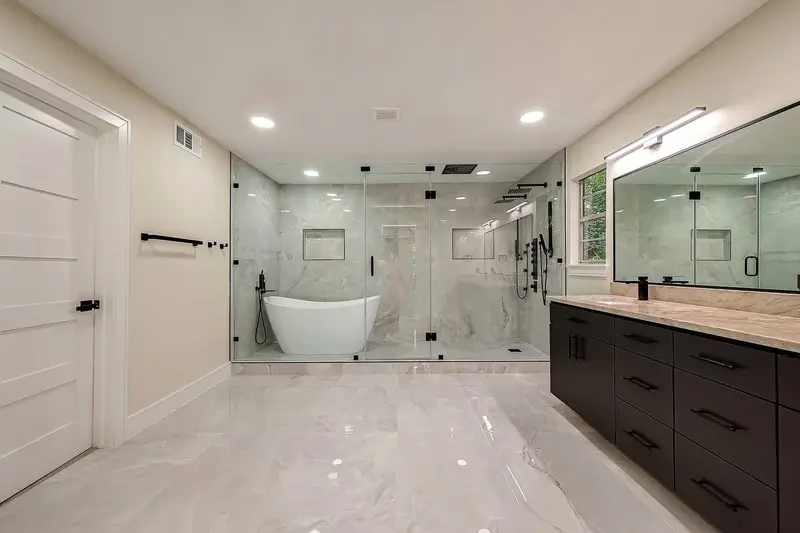
If your primary bathroom has space, a walk-in shower plus a freestanding tub is a popular combination. If space is tight, a larger shower and keeping a tub in a hall bath often works better than squeezing both in.
Practical points to settle early
- Waterproofing. A shower is only as good as what is behind the tile. Ask how it will be waterproofed.
- Glass. Frameless, semi-frameless and fixed panels differ in look and price.
- Floor and drain. Curbless showers require planning the floor slope and the drain.
- Ventilation. A good exhaust fan protects the finished room from moisture.
- Safety. Slip-resistant floor tile and optional grab bars or benches.
Talk it through with us
We look at your space and how you use it, then help you choose. Read about our bathroom remodeling, browse bathroom projects, or request a free estimate.